


Language learning for immigration
Learning the language before you emigrate is one of the first and most important things to sort out before you travel. Whether you are moving for work, for study or for residency, language learning for immigration helps you speak the language of your destination properly, settle into a new environment more easily, open up more job opportunities and adapt to everyday life faster.
At TeachyTalk we work with the best teachers in Iran and run courses built specifically for immigration, so you reach the level you need in the shortest time possible.
Why choose the TeachyTalk language course for immigration?
The figures show that now most people spend a large part of the day at work or stuck in traffic, they prefer to meet their needs online. Technology has moved on too, and a great many jobs and everyday tasks now call for English — which is exactly where an online language class earns its place. These are some of the things that matter most about ours:
Private, interactive classes
The whole class is yours, so you can concentrate on the skills you need most — conversation, exam preparation, or the language of your job.
Teaching pitched at your level
It makes no difference whether you are a beginner or already advanced: the material and the exercises are chosen to fit the level you are at now, so the path works out more effective.
A study plan matched to your immigration goal
Your learning plan is built around your destination country, the type of move (work, study or residency), your language level and how long is left before you go.
Teachers who specialise in language teaching
On TeachyTalk you can choose a teacher whose approach fits your goals and your needs, and who will take the path forward around your own circumstances.
A focus on real immigration situations
Alongside the language itself you practise the skills real life will ask of you: job interviews, everyday conversation, getting along at work, and formal correspondence.
Flexible class scheduling
The day and time of each class are settled between you and your teacher, so you can keep learning alongside a job or your studies.
A trial session and a placement test
Before the course starts you can sit a placement session, so you pick the right teacher and the right study plan knowing where you stand.
Ready for the exam and for real life
As well as building your language skills and preparing for exams such as TOEFL, IELTS or Goethe, you work on what you will need after the move — at work, at university and in daily life.
The benefits of learning the language before you emigrate
Learning the language before you emigrate brings a number of benefits that will serve you well in your destination country. These are some of the most important of them:
- Communicating effectively with native speakers
- A better chance of being hired, and of doing well in job interviews
- Being better prepared to study at a university abroad
- Handling administrative and banking matters more easily
- More confidence in social situations
- Less stress through the first months after the move


The more time you give to your language skills before you emigrate, the fewer obstacles you will meet once you arrive, and the faster you will settle into your new surroundings. How long the learning takes differs from person to person, of course, and depends on things like your current level, how much you practise and which language you are heading towards. The time it takes for learning German for immigration, for instance, is not the same as for learning English for immigration — each has its own path and its own complications.
Which language skills matter most for immigration?
One of the commonest mistakes people applying to emigrate make is putting too much weight on memorising vocabulary or working through coursebooks — when living in your destination country calls for a set of language skills, each of which earns its keep in a different situation.
If your only goal is a score in a language exam, you may well find yourself struggling after the move to talk to people, get everyday things done or hold your own at work. That is why a language learning for immigration plan has to build all four core skills evenly.
Building your speaking
Speaking is the skill you will lean on every single day after the move. Introducing yourself on your first day at work, shopping, seeing a doctor, talking to colleagues, sitting a job interview — all of it rests on being able to speak fluently and to the point.
Language classes built for immigration are not about memorising ready-made sentences; the aim is the ability to communicate in real situations. Practising conversation on practical topics, correcting your pronunciation and building your confidence are the most important parts of that path.
Building your listening
Understanding native speakers is one of the main obstacles most immigrants run into. Different accents, the speed people talk at and everyday idioms mean that even those who hold a language certificate struggle through the first months.
Working on your listening with real conversations, audio, video and practice with your teacher prepares you to communicate effectively at work, at university and in daily life.
Building your writing
Writing counts for a great deal in the situations immigration puts you in. Emailing an employer, corresponding with a university, filling in official forms, putting together a CV or a motivation letter, even dealing with government bodies — all of it needs decent writing.
Knowing how a text should be structured, choosing the right words and keeping to the conventions of written language make your message land more professionally and more precisely.
Building your reading
Once you have moved, every day brings a different kind of text in front of you: employment contracts and tenancy agreements, street signs, government websites, official letters and the news.
Reading well helps you take in the information you need faster, make better-informed decisions, and depend less on a translator or on other people.

How does language learning for immigration work at TeachyTalk?
At TeachyTalk the path to learning a language for immigration is not the same for everyone. Each learner’s plan is built around their reason for moving, their destination country, the level they are at now and the time they have available, so they get to where they need to be as quickly as possible.
Here is how language learning for immigration runs at TeachyTalk:
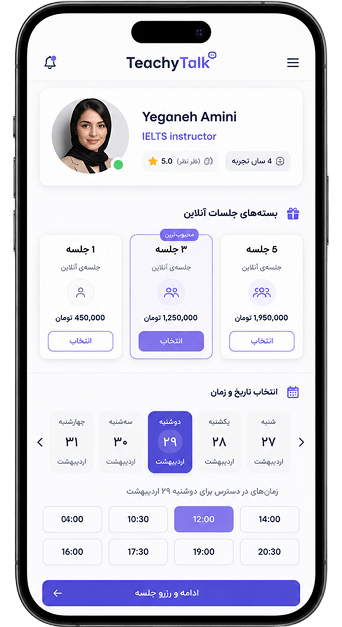
A placement test and a look at your immigration goal
A study plan of your own
Choosing the right teacher
Continuous assessment and improvement
Practising the skills you will actually use
Why is a private class the better choice for immigration?
Group classes suit plenty of people, but when you have a goal as specific as emigrating, a private class makes the path more deliberate and faster. Here is what taking a private class for language learning for immigration gives you:
In a private class the whole hour belongs to you, and your teacher can set the plan by your strengths, your weak spots and what you are emigrating for. That means class time goes on the material you genuinely need.
A private class also leaves far more room to practise conversation, clear up mistakes, get feedback and rehearse real situations — which counts for a great deal in your confidence, and in how ready you are for life in your destination country.
For anyone with only a little time left before the move, or who wants to reach the level required sooner, this kind of class usually pays off better than a general course.
Frequently asked questions about language classes for immigration
Everything worth knowing before you start an online language class
Do I need a high level of the language to start learning it for immigration?
No. You can start even as a complete beginner. The plan is built around the level you are at now and carries on step by step until you reach the level you need.
When is the best time to start learning the language before emigrating?
The sooner you begin, the more room you have to build your skills and work on your weak spots. Starting early also means preparing for the exams, and for the move itself, without time pressure.
Can I focus only on the language my job calls for?
Yes. If you are heading into a particular field — medicine, engineering, IT or business — the teaching can be centred on the terminology and the situations that belong to it.
Can I carry on with the online classes after I have emigrated?
Yes. Because the classes are online, you can keep going after the move with no limits on where you are, and keep building your language skills.
Do I need to be at a particular level to start?
No. Classes run at every level from beginner to advanced, and you will take a placement test before you start.
How can I contact TeachyTalk support?
You can reach the support team on 09005601191 with any question or problem you have.